
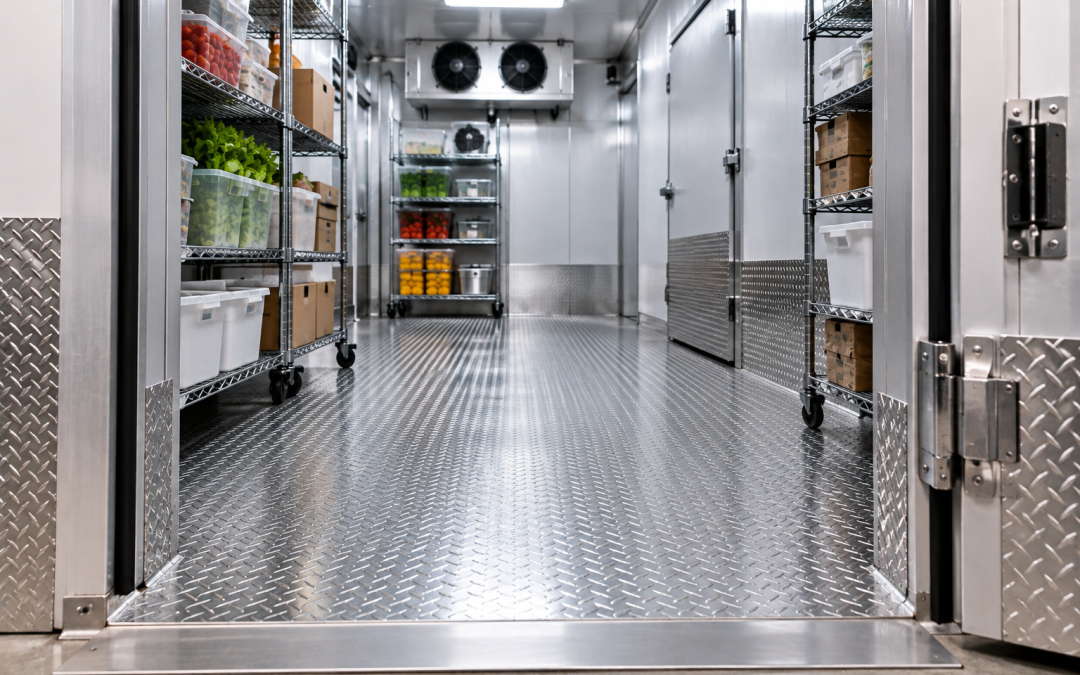
A walk-in cooler floor showing soft spots, cracking, or standing moisture is often the first visible sign of subfloor damage, and it can flag a health code issue before an inspector even arrives. Left unaddressed, a failing floor undermines the sealed, cleanable surface commercial kitchens are required to maintain, making walk-in cooler floor replacement the fix that restores both safety and compliance.
Why Walk-In Cooler Floors Wear Out First
Commercial kitchens push walk-in cooler and freezer floors harder than almost any other surface in the building. Three forces work against the subfloor at once: constant condensation from the temperature difference between the cooler interior and the room outside, repeated expansion and contraction as doors open and close throughout a shift, and the physical weight of loaded carts, hand trucks, and foot traffic moving across the same few feet of floor all day. In South Florida kitchens, ambient humidity adds another layer of moisture that the flooring has to withstand year-round, on top of the cooler’s own condensation.
Over time, that combination breaks down flooring that was never built to handle sustained moisture and mechanical stress. What starts as a small soft spot near a drain or door threshold can spread into structural damage that affects the whole unit, not just the surface layer.
Warning Signs You Shouldn’t Ignore
Most operators notice a problem only after it has already become obvious, but the early warning signs are usually there first. Watch for:
- Soft or spongy spots underfoot when walking across the cooler or freezer floor
- Visible cracking, buckling, or separation in the flooring material
- Standing moisture or drainage issues that do not clear between shifts
- Misalignment between the floor and the door threshold, creating a gap or lip
- Slippery or unsafe surfaces, especially near entry points
Any one of these on its own is worth a closer look. Several appearing together usually means the subfloor underneath has already started to deteriorate, even if the surface still looks mostly intact to a quick glance during a shift.
When a Floor Problem Becomes a Health Code Problem
Health inspections check refrigerated storage for sealed, cleanable, slip-resistant flooring, and a cracked, spongy, or moisture-damaged cooler floor does not meet that standard. Cracks and gaps trap moisture and debris in places that cannot be properly cleaned or sanitized, which is exactly what inspectors are trained to flag during a walkthrough. A visibly deteriorating floor is a realistic citation risk, and it is also a liability issue on its own: standing moisture near a walk-in door creates a slip-and-fall hazard for staff moving product in and out all day.
Beyond the inspection itself, an unsealed or cracked floor is harder to keep genuinely clean between health department visits. Trapped moisture and debris in damaged seams can linger long after a normal mop-and-sanitize routine, which works against the food safety standards a walk-in cooler is supposed to help maintain in the first place.
Why Acting Early Matters
A misaligned threshold does more than look unfinished. When the floor no longer meets the door cleanly, the seal has a harder time holding a tight line, which lets warm air work its way into a space that is supposed to stay cold and dry. That extra strain shows up as a cooler working harder to hold temperature, on top of the moisture and safety issues already at the floor itself.
Addressing a damaged floor early, while it is still a repairable spot rather than a full section of failed subfloor, is usually the more affordable path. Waiting until the damage spreads under fixtures, shelving, or across the whole footprint of the unit tends to turn a straightforward floor replacement into a longer, more involved project.
Fixing It: Diamond Plate Flooring Over the Existing Subfloor
The fix does not have to mean tearing out and rebuilding the whole cooler. Floor replacement with custom-fit diamond plate protection panels installs a steel panel system directly over the existing subfloor, giving you a slip-resistant, sealed surface engineered for cooler conditions, often at a fraction of the cost of a full cooler renovation.
Diamond plate protection is not limited to floors. For a closer look at how the same steel panel system extends to doors, corners, and walls throughout a walk-in cooler, this deeper dive into diamond plate protection covers the full picture. For flooring specifically, the diamond plating services page outlines what a floor-only installation involves and how it is fitted to your existing layout.
Pairing Floor Work With Door and Gasket Repairs
A damaged floor and a failing door often go hand in hand, since the same moisture and temperature swings that break down flooring also wear out door seals over time. If your cooler’s threshold no longer lines up cleanly with the new or existing floor, it is worth having gasket repair and replacement evaluated in the same visit. Handling both issues together avoids a second service call and closes off the moisture path that damaged the floor to begin with.
Getting an Estimate Without Disrupting Service
Floor replacement can typically be scheduled around normal business hours, and Gasket Doctor offers 24/7 availability for kitchens that need the work done overnight or between shifts to avoid downtime. Estimates are done on-site and at no cost, so there is no guessing about scope or price before committing to the work.
If your walk-in cooler or freezer floor shows any of the warning signs above, don’t wait for a health inspection to force the issue. Contact Gasket Doctor to schedule a free on-site estimate and find out whether floor replacement, or a paired door and gasket service, is the right fix for your kitchen.
Frequently Asked Questions
Soft or spongy spots usually come from prolonged moisture exposure combined with the constant temperature cycling between the cooler interior and the surrounding kitchen. Condensation seeps into seams and edges over time, weakening the subfloor material underneath the surface layer. Heavy cart and hand-truck traffic across the same paths accelerates the breakdown, especially near drains and door thresholds. This kind of damage usually develops gradually over several years rather than appearing all at once.
It can be. Health inspections require refrigerated storage areas to have sealed, cleanable, slip-resistant flooring, and a cracked or buckled floor no longer meets that standard. Cracks and gaps trap moisture and debris that cannot be properly sanitized, which is exactly the kind of issue inspectors are trained to flag during a routine walkthrough. Left uncorrected, the same damage that risks a citation can also lead to repeat findings on future inspections.
In many cases, yes. Custom-fit diamond plate protection panels install directly over the existing subfloor, which addresses soft spots, cracking, and slippery surfaces without a full teardown. This approach is typically more affordable than a complete cooler renovation and can often be paired with door or gasket work in the same visit. A technician can usually tell during a free on-site estimate whether a spot repair will hold or a full floor replacement is the more reliable long-term fix.
Timing depends on the size of the cooler and the extent of the existing damage, so an on-site estimate is the most reliable way to get a specific timeframe for your location. Scheduling is built around minimizing disruption to normal service, and 24/7 availability means floor work can often be done overnight or during slower hours instead of during business hours. Larger walk-ins or floors with extensive subfloor damage naturally take longer than a single soft spot near a threshold.
Yes, in most cases. Because diamond plate panels install over the existing subfloor rather than requiring a full rebuild, the work can typically be scheduled around normal business hours or completed overnight to avoid interrupting service. Coordinating timing in advance also allows product to be moved to backup storage during the installation window. A free on-site estimate is the best way to get a timeline specific to your kitchen’s layout and cooler size.