
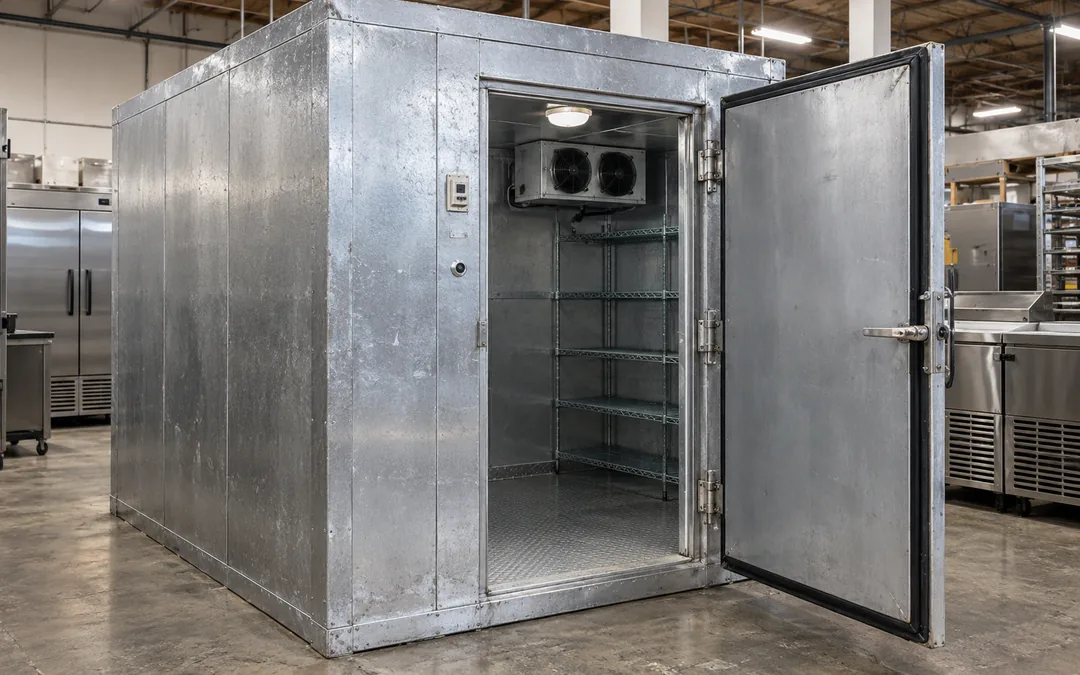
A used walk in cooler can save a restaurant real money, but only if the box is still sealing, closing and draining the way it should. Before you sign anything, walk the unit with a plain checklist. Check the door, the gaskets and the floor first, because those three areas decide how hard your compressor works every day. Our team at Gasket Doctor has serviced South Florida coolers since 2014 and can inspect a used unit on site before you buy.
Why South Florida Buyers Need a Closer Look
Heat and humidity are hard on refrigeration equipment here. A cooler that spent years behind a busy Miami kitchen has seen constant door traffic, steam, grease and salt air. Rubber seals dry out faster, hinges loosen and moisture finds its way under floors. A unit can look clean and still be tired underneath. That is why an expert gasket and door inspection matters more in Miami than in cooler climates, and why a seller’s word is never enough.
Ask the seller how old the cooler is, what it is stored and why it is being sold. Request any service records. If the box came out of a closed restaurant, ask whether it was powered down for long. Standing water and mold can build up quickly in a unit that sat unused during a Florida summer, so talk with our Miami team if the history is unclear.
The Door Checklist
Start with the door because it opens hundreds of times a day. Close it slowly and look for light or a gap along all four edges. The door should hang square and close flush without a hard push. A warped, cracked or sagging door is a sign to budget for a cooler door replacement instead of a simple repair.
Look closely at the hardware. Worn hinges let the door drop and pull the seal out of alignment. Check that the latch pulls the door shut with little effort and releases easily from either side. Make sure the closer brings the door back on its own. These small parts are easy to overlook, yet replacement hinges, latches and closers are some of the first things a seller hopes you will not test.
Finally, check the door edges and kick plate for dents or rust. Bare metal at the bottom of the door takes a beating from carts and boxes. If the surface is already damaged, ask about diamond plate protection so the repair lasts.
The Gasket Checklist
The gasket is the soft seal around the door, and it is the cheapest part to fix and the most expensive to ignore. Run your hand along the entire seal. It should feel flexible, not hard, cracked or flattened. Look inside the folds for black mold or food residue, since those folds can hold bacteria that regular cleaning misses. Torn corners and loose sections are common failure points, and our gasket replacement service can price any repair.
Try the paper test. Close a strip of paper in the door at several points around the frame. If the paper slides out easily, the seal is weak at that spot. Repeat on every side. A failing gasket can raise energy costs by up to 20 percent, so a used cooler with poor seals will cost you every month. Because no universal gasket exists, each replacement is custom measured and fabricated, which is worth pricing before you negotiate.
The Floor Checklist
Floors are the most expensive surprise in a used walk in cooler. Step inside and walk the entire surface slowly. Feel for soft spots, bounce or uneven areas. Look for rust, bubbling, stains and gaps along the walls. Soft floors often mean moisture has reached the insulation, and wet insulation does not cool well. Our floor replacement experts can tell you what a repair would involve.
Pay attention to the threshold, where carts roll in and out. Damaged or uneven subfloors can collect moisture and lead to failed health inspections. If you see wear, price out a walk in cooler floor replacement before you agree to the purchase. Diamond plate flooring is a durable option for high traffic boxes, and our floor and diamond plate team can explain what fits your layout.
Other Items Worth Checking
Look at the thermometer and any gauges. Make sure the displayed temperature matches what you measure with your own thermometer. Check for plastic curtain strips at the opening, since they help hold cold air in during busy service. Our PVC strip curtains are USDA approved and stay flexible in freezer temperatures. Also confirm the lights, the shelving and the condensate drain are all in working order.
What to Do Before You Buy
Bring a trusted refrigeration contractor if you can. Take photos of everything you find, write down the model information and ask the seller to lower the price for needed repairs. Add the cost of the door, gasket and floor work to the asking price so you see the true total. Our free estimates are available around the clock, and we do not charge for site visits.
If you manage restaurants in Broward or Palm Beach County, the same checklist applies. We also serve West Palm Beach and nearby cities, so you can line up one team for inspections, repairs and long term care.
Questions to Ask the Seller
Before you visit, prepare a short list of questions. Ask when the door seals were last replaced and whether any hinges, latches or closers have been swapped. Ask if the floor has ever been patched or if water has pooled inside the box. Honest sellers answer quickly and share records. If the answers are vague, treat that as a signal to slow down. Our Miami team can join you on site and help you read what the seller is not saying.
Take your own thermometer and let the unit run for a few hours while you review the paperwork. A cooler that struggles to hold temperature with an empty box will struggle more once it is full of product. If you spot a problem, bring it up politely and ask for a repair credit. A written free estimate from a refrigeration specialist gives you solid numbers for that conversation.
Budget for the Hidden Costs
The asking price is only the start. Add the cost of new gaskets, any hinge or latch replacements and a realistic allowance for floor repair. Remember delivery, setup and any electrical work your kitchen needs. A cooler that looks cheap on paper can become expensive once every small repair is counted. Our gasket and door experts can price the seals and hardware before you commit, so you can compare a used box against a new one with real figures in hand.
Also think about timing. If you plan to open a new location, build repair days into your schedule so the cooler is ready before your inspection. Protecting the opening date is often worth more than shaving a few dollars off the purchase price, and our team offers flexible scheduling to help you stay on track.
Next Steps
Once you have walked the unit, sort your notes into three piles: items that are fine, items that need a quick fix and items that change the price. Share the list with the seller and decide whether the deal still makes sense. If it does, schedule repairs before the cooler goes into service. Our Miami team is Top Rated for fast, honest assessments, and you can call or email us to book a visit before you sign.
Frequently Asked Questions
What should I check first on a used walk in cooler?
Start with the door, the gaskets and the floor. Close the door and look for gaps, test the seal with a paper strip and walk the floor for soft spots. Our Miami service team can confirm what you find.
How do I know if a cooler gasket is bad?
A bad gasket looks cracked, stiff, torn or moldy, and it lets a strip of paper slide out easily. Cold air escaping around the door is another sign. See our gasket replacement service for repair options.
Is a used walk in cooler floor worth saving?
It depends on how far moisture has traveled. Small surface wear can often be protected, but soft or sagging areas usually point to a full floor replacement.
Can a warped cooler door be repaired?
Sometimes new hinges or a new gasket will bring a door back into line. If the door is warped, cracked or no longer closes flush, door replacement is the better choice.
How much does a failing gasket affect energy costs?
A failing gasket can raise cooler energy costs by up to 20 percent and can overwork the compressor. Read more on our blog or request an estimate.
Do you inspect used coolers before purchase?
Yes. Our experienced technicians make on site visits in Miami and West Palm Beach, and estimates are free. Contact us to schedule a visit.
Are replacement parts custom made?
Yes, because a universal cooler gasket or door does not exist. Each part is measured for your unit, as explained on our parts and accessories page.
How often should gaskets be inspected after I buy?
Inspect gaskets at least every 12 months, or every 6 months for high traffic kitchens. Wipe them monthly with mild soap and water. Our Top Rated team is ready to help.