
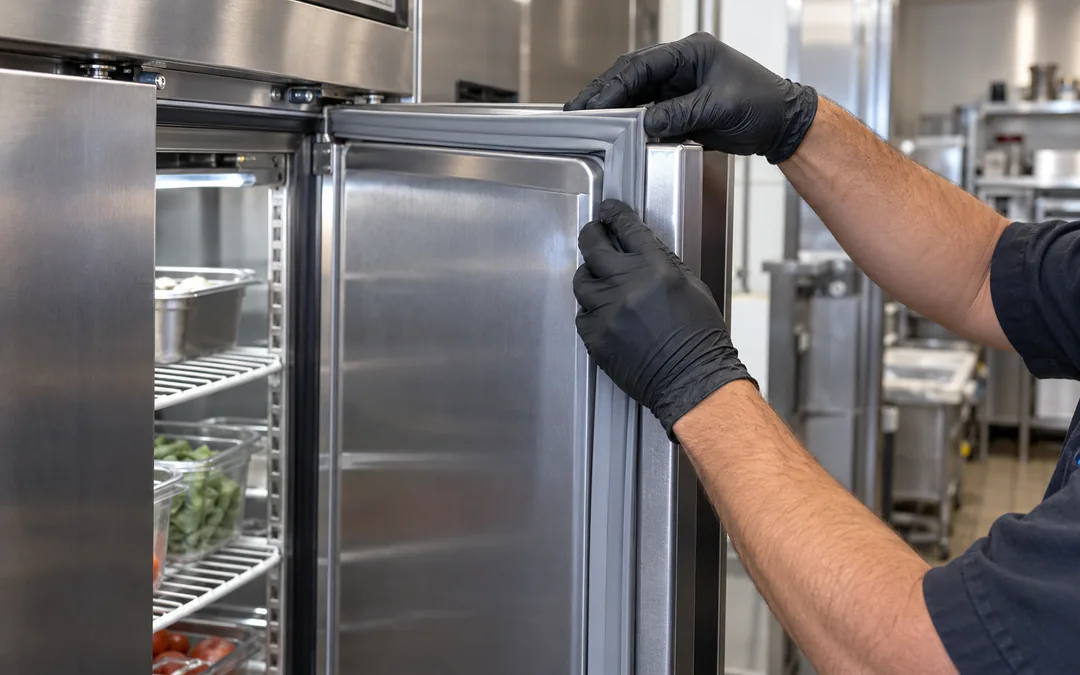
A tired gasket on a reach in the refrigerator or prep table is easy to ignore until the food starts running warm. In a busy South Florida kitchen, those soft rubber seals work harder than almost any other part of the line. This guide explains how to spot a failing gasket, what replacement involves and how to keep every cold station sealing properly. If you need help right now, our expert gasket team can measure, fabricate and install a custom fit for your equipment.
Why Gaskets Fail Faster in South Florida
Gaskets wear out from temperature swings, moisture, frequent door use and food residue. Miami adds heat and humidity on top of that, so seals soften, crack and flatten sooner than they would in a cooler climate. Reach in doors and prep table lids open all day during service, which means the seal flexes thousands of times a week. Over time the rubber loses its shape and stops pressing tightly against the cabinet. Our Miami service page explains how we serve kitchens across the county, and our gasket repair and replacement service covers every common cold station.
Warning Signs You Should Not Ignore
The first sign is often condensation or frost around the door edge. You may also notice the unit running almost constantly, ice forming on the evaporator or products at the front of the shelf feeling warmer than the back. Look at the seal itself. Cracks, tears, hard spots and curled corners all mean the gasket is no longer doing its job. Black spots in the folds point to mold, and those folds can hold bacteria that routine cleaning misses. If you see any of this, a quick call to our team can confirm whether repair or replacement makes sense.
Try the Paper Test
You can check a seal in under a minute. Place a strip of paper across the gasket and close the door. Pull gently on the paper. If it slides out with no resistance, the seal is weak at that point. Test the top, bottom and both sides, and repeat the process on every door and drawer. Prep tables deserve extra attention on the lid seal and the drawer seals underneath. A failing gasket can raise cooler energy costs by up to 20 percent, so it is worth catching early. Learn more about custom gasket replacement on our service page.
What Happens When a Gasket Leaks
A leaking gasket does more than waste electricity. Warm air entering the cabinet forces the compressor to run longer, and that extra strain can shorten its life. Food stored above safe temperatures can spoil, and your kitchen can fail a health inspection. For a restaurant, one bad seal can mean lost product and a costly repair call at the worst possible time. Staying ahead of the problem is part of commercial refrigeration care done well.
Why There Is No Universal Gasket
Many owners search online for a part number and order the closest match. That often leads to a seal that is a half inch too long or the wrong profile for the door channel. A universal cooler gasket simply does not exist. Brands, models and even production years differ, and doors are not always square after years of use. That is why we measure each opening and fabricate the seal for a custom fit. Our parts and accessories page shows the related hardware we can source at the same visit.
How Replacement Works
A typical visit starts with a free estimate and a quick inspection of the door, the hinges and the seal channel. Our experienced technician measures the opening, orders or fabricates the gasket and returns to install it after your approval. We clean the channel, fit the new seal, check alignment and run the paper test again. If the door itself is warped or no longer closes flush, we will tell you honestly when door replacement is the better choice. Bring up any other concerns, and we can schedule the work around your service hours.
Prep Tables and Reach In Units: Small Differences
Prep tables have a hinged lid plus drawers or doors below, so each opening may need a different seal. Reach in refrigerators and freezers usually have one to three full doors, and each door seal wears at its own pace. The door nearest the line tends to fail first because it opens the most. Freezer seals can stiffen with frost, so check them often. For walk-in boxes at the same site, ask about our plastic curtain strips to reduce cold air loss during busy shifts.
Keep Your Gaskets Healthy
Wipe gaskets once a month with mild soap and water, then dry them. Avoid harsh chemicals or sharp tools that can nick the rubber. Schedule an inspection at least every 12 months, or every 6 months for high traffic kitchens. Keep the door channel clear of crumbs and grease. If you operate near the Palm Beaches, our West Palm Beach team follows the same process. Browse more maintenance guidance on our blog.
When to Repair and When to Replace
A new gasket solves most seal problems, but not all of them. If the door is warped, cracked or no longer closes flush, a fresh seal will not hold for long. In that case the smarter move is a new door or a hinge repair, followed by a new gasket. Our door replacement service covers those jobs, and our technician will tell you plainly which path saves money. Reach in units that are many years old may also have worn hinges, so ask us to check the whole door during your estimate.
If the cabinet frame or channel is damaged, the seal may leak even when the gasket is brand new. A careful inspection finds these issues early. Request a free estimate and we will look at the seal, the hinges and the door edge before recommending a fix.
Common Gasket Mistakes to Avoid
Many kitchens lose time and money on the same few mistakes, and our gasket specialists see them every week. The first is ordering a generic gasket online and hoping it fits. The second is stretching or trimming a seal to make it reach, which leaves gaps at the corners. The third is cleaning with harsh chemicals that dry out the rubber. A fourth is ignoring a small tear because the unit still runs. Each of these shortens the life of the seal and raises energy costs.
A better habit is to catch problems early, wipe seals gently and call for a custom fit when something looks off. Our gasket repair and replacement team can handle the measuring, fabricating and installing in one visit. You can also read more care tips on our blog.
Plan for Peak Season
South Florida kitchens get busiest in winter, during holiday weeks and around big local events. That is the worst time for a cold station to fail. Schedule a gasket check before the rush so you are not scrambling for a repair when every burner is lit. Our Miami service team can walk the line, test each door and quote any replacements in a single visit, which keeps your equipment ready for the crowds.
Next Steps
Walk your line this week and test every reach in the door and prep the table lid with the paper test. Write down which seals are weak and which units run constantly. Then bring that list to a trusted gasket specialist. Our Miami team can price every seal in one visit, and you can request a free estimate today so your cold stations stay dependable all season.
Frequently Asked Questions
How do I know if my reach in refrigerator gasket needs replacing?
Look for cracks, tears, stiffness, mold and frost around the door. If a paper strip slides out easily, the seal is weak. Our gasket service page lists the common signs.
Can you replace gaskets on prep tables?
Yes. We replace seals on prep table lids, drawers and doors, and we serve restaurants, grocery stores, convenience stores and medical facilities. Request an estimate to get started.
Why does a universal gasket not work?
Equipment sizes, profiles and door channels vary too much for one part to fit. We measure and fabricate each gasket so it seals tightly.
How long does gasket replacement take?
The visit itself is usually short once the custom gasket is ready. Parts are ordered through our supplier network and delivered to the site after you approve the estimate. Contact us for timing on your equipment.
Will a bad gasket raise my electric bill?
Yes. A failing gasket can raise energy costs by up to 20 percent and make the compressor work harder. Our Miami team can help you stop the loss.
How often should I inspect gaskets?
Inspect them at least every 12 months, or every 6 months for high traffic sites. Clean them monthly with mild soap and water. See our blog for more tips.
Do you offer free estimates?
Yes. Estimates are free, site visits carry no charge and we are available around the clock. Read what customers say on our reviews page.
Do you serve West Palm Beach?
Yes. We serve Miami, Fort Lauderdale and West Palm Beach, including nearby cities across South Florida.