
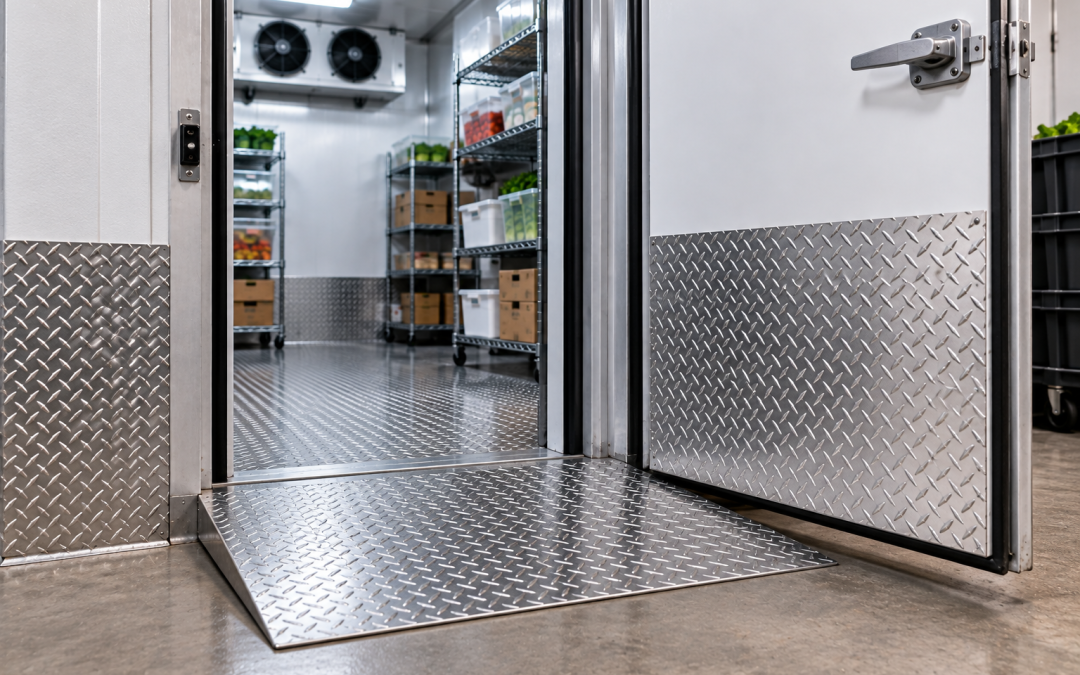
Diamond plate protection belongs at the three spots a walk-in cooler takes the most punishment: door kick plates, floor panels, and entry ramps. Gasket Doctor’s diamond plating services install steel diamond plate at these high-impact points so carts, kicks, and constant foot traffic don’t tear apart the surfaces underneath.
Where a Walk-In Cooler Actually Needs Diamond Plate
A walk-in cooler doesn’t wear out evenly. Most of a cooler’s interior sits untouched for years, while a handful of specific spots absorb hit after hit every single shift. Door edges get kicked open when a cook’s hands are full. Floors near the threshold take the brunt of loaded carts rolling in and out. Ramps leading into the unit collect condensation and spilled product, turning a walkway into a hazard.
Diamond plate protection exists because those specific spots need something tougher than the standard surface a cooler ships with. Gasket Doctor builds diamond plate sets to order for each of these three high-traffic zones, using steel construction that Gasket Doctor describes as able to “withstand a heavy hit from being kicked, to having a metal supply cart ramming into it.”
Door Kick Plates
The bottom third of a cooler door absorbs more abuse than any other panel on the unit. Staff push doors open with a foot, a hip, or the front of a cart when their hands are full of product. Over time, that repeated contact dents the door skin, cracks the finish, and eventually compromises the seal around the gasket.
Door kick plates are steel panels installed over that vulnerable zone. They take the impact instead of the door itself, which protects the door’s structural integrity and its seal. A door that’s already dented or no longer closing flush is worth addressing on its own before plating goes on, since a damaged door frame can undermine even a well-protected surface. Since that often becomes a question of repair versus replacement, it’s worth reading gasket repair vs. door replacement if a door is already showing wear.
Diamond Plate Flooring
Cooler flooring faces a different kind of stress: constant rolling loads from carts, dollies, and pallet jacks, plus moisture from condensation and melted ice that never fully dries. Standard flooring wears through in the same paths, day after day, until low spots and cracks start letting moisture underneath.
Steel diamond plate flooring panels hold up to that rolling traffic and are simpler to keep clean than the alternative most kitchens fall back on: heavy plastic mats. Those mats have to be dragged out, hosed down, and dragged back in for every real cleaning, and they trap moisture and debris underneath in the meantime. A steel floor panel wipes down in place, which matters most in the paths that see the heaviest daily traffic.
| Diamond Plate Flooring | Rubber/Plastic Mats | |
|---|---|---|
| Cleaning | Wipes clean in place | Must be removed and hosed down |
| Moisture underneath | Sealed surface, less trapped moisture | Traps water and debris beneath mat |
| Impact from carts | Built for rolling and impact loads | Wears, tears, and shifts under load |
| Slip resistance when wet | Textured pattern resists slipping | Can shift or curl, creating a trip hazard |
| Daily upkeep | Wipe-down only | Remove, clean, and reposition |
If the flooring underneath is already failing, the warning signs usually show up before the floor gives out completely. Our guide to walk-in cooler floor warning signs walks through what to look for. In cases where the subfloor itself has deteriorated, a straight floor replacement may be the right call before or alongside diamond plate protection, since plating is meant to protect a sound floor rather than rebuild a failed one.
Ramp Plates
Any cooler with a raised threshold or a ramp leading in and out has a slip risk built into the design. Condensation forms where warm kitchen air meets the cold unit, and spilled liquids collect at exactly the point where staff are moving fastest with a loaded cart. Ramp plates use a textured diamond surface at that transition point specifically to increase worker safety by reducing the chance of a slip caused by that spillage or condensation.
How Installation Works
Every diamond plate set Gasket Doctor installs is built to order for the specific cooler it’s going into, then fitted in place by professional technicians. Kick plates, floor panels, and ramp sections can each be installed on their own, so a kitchen can target whichever zone is failing first, whether that’s a battered door, a worn entry path, or a slick ramp, instead of tackling the whole cooler at once.
Ready to Protect the Cooler’s Weak Points
The spots on a walk-in cooler that fail first are almost always the same three: the base of the doors, the floor near the entrance, and any ramp leading in. Reinforcing those areas with steel diamond plate is a targeted fix rather than a full remodel.
As a trusted, experienced diamond plate installer for restaurants, grocery stores, and medical facilities across Miami-Dade, Broward, and Palm Beach counties, Gasket Doctor builds every set to order rather than fitting a generic panel to a space it wasn’t made for. Technicians are available 24/7 at 954-634-2121. To get a custom diamond plate set built for a specific cooler, reach out through the contact page to schedule an assessment.
Frequently Asked Questions
Diamond plate protection is applied at the three spots that take the most physical abuse: kick plates at the base of cooler doors, flooring panels near entrances and high-traffic paths, and ramp plates on any threshold or incline leading into the unit. These are the areas most likely to be hit by carts, kicked open by staff, or exposed to spills and condensation throughout a normal shift. Gasket Doctor builds each set to order for the specific cooler it’s installed on, rather than using a one-size-fits-all panel.
For a cooler floor, steel diamond plate has a real advantage over rubber or plastic mats in day-to-day maintenance. Mats have to be dragged out and hosed down separately, and they trap moisture and debris underneath between cleanings, which can create odor and sanitation issues over time. A diamond plate floor panel wipes clean in place and holds up to rolling carts without shifting or curling the way a mat can, especially in the paths that see the most daily foot and cart traffic.
Diamond plate’s steel surface is easy to wipe down and sanitize, which is the quality health inspectors look for in commercial kitchen floor material generally. Gasket Doctor does not publish a specific code citation tied to its diamond plate installations, so a kitchen with a particular local health code question should confirm requirements with their local inspector before installation. Keeping the surface clean and free of standing moisture is generally the practical standard inspectors are checking for.
Yes. Diamond plate kick plates, flooring, and ramp sections are built to order and fitted onto an existing cooler by professional technicians. Each piece can be installed on its own, so a kitchen can protect just the doors, just the floor, or just a ramp without tearing into the rest of the unit or shutting the cooler down for an extended renovation.
No, the raised diamond pattern is built specifically to resist slipping. Water, condensation, and spills sit in the recessed channels between the raised diamonds instead of forming a flat, slick film across the surface. It’s the same tread pattern long used on vehicle running boards and industrial walkways for that reason, and it’s why Gasket Doctor uses it on ramp plates where spillage and condensation are a daily risk for staff moving quickly with loaded carts.